
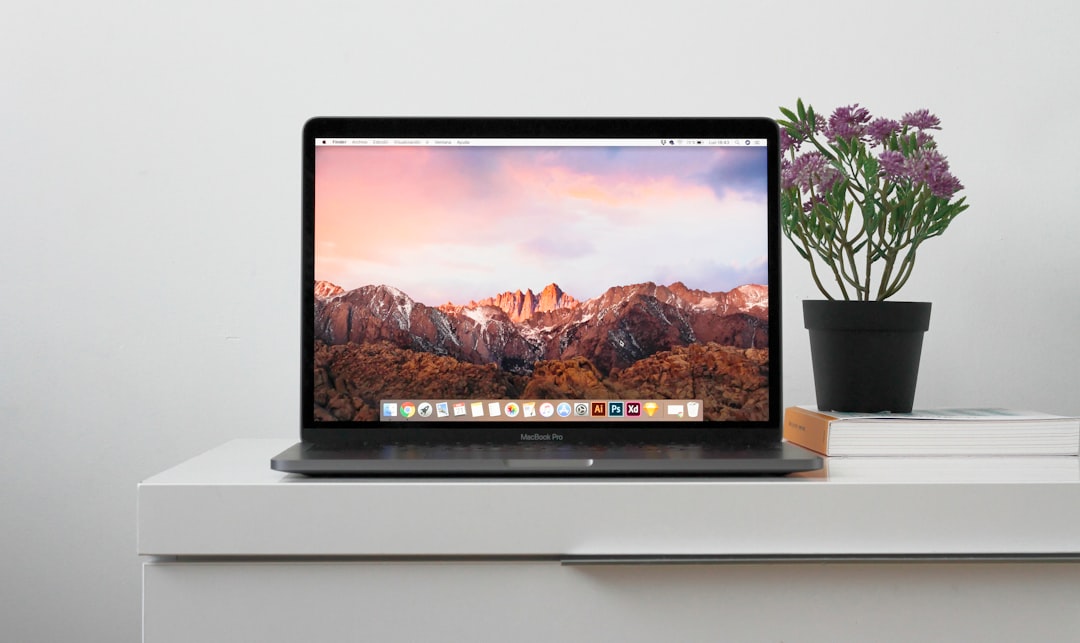
Meta Superintelligence Labs released Muse Glimmer on August 10, 2026. It’s a 30-billion-parameter open-weight model shrunk to under 20GB, built specifically to run on-device on a single consumer-grade GPU. That’s the detail that separates it from the last two open-weight releases I’ve written about this month. Kimi K3’s 2.8 trillion parameters never had a chance of running on my hardware. Muse Glimmer is small enough that my own M-series Mac — the same machine already running Nous Hermes 4 through Ollama — could plausibly handle it.
In this article
- What Meta actually shipped on August 10
- Why Muse Glimmer clears the hardware bar Kimi K3 didn’t
- How it compares to the local model I already run
- What I’d need to do before actually trying it
What Meta Actually Shipped on August 10
Muse Glimmer is a multimodal model, distilled from Meta’s larger Muse system down to 30 billion parameters. It pairs a 2-billion-parameter ViT-style perception encoder for vision with a 28-billion-parameter text decoder. Meta released it under the Apache 2.0 license on Hugging Face. Engineers shrank its footprint to under 20GB through a combination of optimization methods, aimed squarely at personal-computer deployment. Chief AI Officer Alexandr Wang led the release. Meta trained and evaluated it specifically for end-to-end agentic task completion and multi-step reasoning, not just chat.
Apache 2.0 is worth flagging on its own. Unlike Kimi K3’s custom license, this is the same permissive, well-understood license that already covers most of the open-source tooling in my stack. There’s no unfamiliar terms to read before deciding whether it’s safe to use on client-adjacent work.
The vision-plus-text split architecture is also a signal about intended use. A 2B perception encoder feeding a 28B text decoder is built for tasks that mix seeing and reasoning — reading a screenshot and acting on it, following a multi-step instruction that references an image. That’s a different design target than pure text generation, and a different one than most of the local models I’ve evaluated so far, which have stayed text-only.
Why Muse Glimmer Clears the Hardware Bar Kimi K3 Didn’t
A 30B model that fits under 20GB and runs on a single consumer GPU is the first open-weight release this month that actually clears the “could I run this on my own machine” bar. Kimi K3’s 2.8 trillion parameters made for a genuinely strong benchmark story. But the honest conclusion of that post was that it belonged to research labs and cloud infrastructure, not a one-person setup. Muse Glimmer inverts that. Meta explicitly optimized it to run on personal computers and Macs. That means the interesting question isn’t whether I could run it — it’s whether I should, and what it would actually replace.
How It Compares to the Local Model I Already Run
Nous Hermes 4 through Ollama is where my client-sensitive drafts and offline work already live. It’s earned that spot over several months of daily use. Muse Glimmer’s pitch is different in emphasis. Meta built and evaluated it around agentic task completion and multi-step reasoning with native multimodal input, while my current local setup is tuned more for text drafting and summarization. If the on-device benchmarks hold up under independent testing, Muse Glimmer reads less like a straight swap for Hermes 4. It reads more like a second local model aimed at a different job — one that touches images and multi-step agent tasks, rather than long-form writing.
That’s a meaningful distinction for anyone building a local-first stack. “Smaller and runs locally” doesn’t automatically mean “replaces what’s already working.” I’d rather run both side by side on real tasks than assume the newer release wins by default.
Why This Reads as a Meta Strategy Shift, Not Just a Model Drop
Coverage of the release frames this as Meta “returning” to open source, which is worth unpacking. Meta’s earlier Llama releases leaned toward large, general-purpose models, aimed at matching frontier labs on broad benchmarks. Muse Glimmer is a narrower bet: a genuinely small, purpose-built model optimized for a specific job — local agentic tasks. It’s a different race than the “biggest open model” contest Kimi K3 just won this quarter.
Where Moonshot spent its resources chasing scale, Meta spent its resources chasing a hardware constraint — and Muse Glimmer landing on the side a solo consultant can actually run is the more useful trend to root for than another trillion-parameter headline.
That’s a strategic contrast worth naming directly. If more labs start optimizing for “fits on a laptop” instead of “tops a leaderboard,” that’s a genuinely better direction for anyone building a private, local-first AI workflow around models rather than hosted APIs.
What Local Deployment Actually Means for Client Privacy
The reason I keep a local model in my stack at all is client data sovereignty: work that shouldn’t route through a hosted API, regardless of how good the privacy policy reads. Muse Glimmer’s on-device design fits that lane by construction. A model that runs entirely on hardware I control never sends a client’s meeting notes or draft language to a third-party server in the first place. That’s the same argument that’s kept Nous Hermes 4 in my stack since May.
What I can’t yet verify: whether Muse Glimmer’s quality holds up on the specific tasks that matter for client work, once it’s actually running locally rather than in Meta’s own benchmark environment. That gap between a launch announcement and a real evaluation is exactly where the honest uncertainty sits.
What I’d Need to Do Before Actually Trying It
Getting Muse Glimmer running would mean pulling the weights from Hugging Face, confirming quantization support in whatever runtime I use alongside Ollama, and testing it against a task Hermes 4 already handles well. None of that is a large lift compared to the cloud-GPU rental Kimi K3 would have required. It’s closer to an afternoon than a research project — exactly the difference a genuinely local-hardware-sized release makes.
I’d also want to run the same prompt through both models side by side on a non-client task first — a blog outline, a personal note summary — before drawing any conclusion about which one earns the daily slot. A single benchmark chart from a lab’s own blog post is a starting point, not a verdict. The only evaluation that’s ever actually changed my stack is one I ran myself, on a task I recognized.
For me, Muse Glimmer is the first release this month I’d actually consider testing, rather than just writing about from the sidelines. I’m not switching anything in my local stack off a launch announcement alone. But a 30B agentic model that fits comfortably on the same machine already running my daily local LLM setup earns a real evaluation, not just a bookmark. That’s a meaningfully different verdict than the one I gave Kimi K3 two weeks ago, and it’s the kind of shift worth naming out loud rather than burying at the bottom of a launch recap.
Sources
- Meta AI Research — Introducing Muse Glimmer
- VentureBeat — Meta returns to open source with Muse Glimmer
- SiliconANGLE — Meta releases open-source Muse Glimmer model
AI-assisted research and drafting. Reviewed and published by ToolMint.