
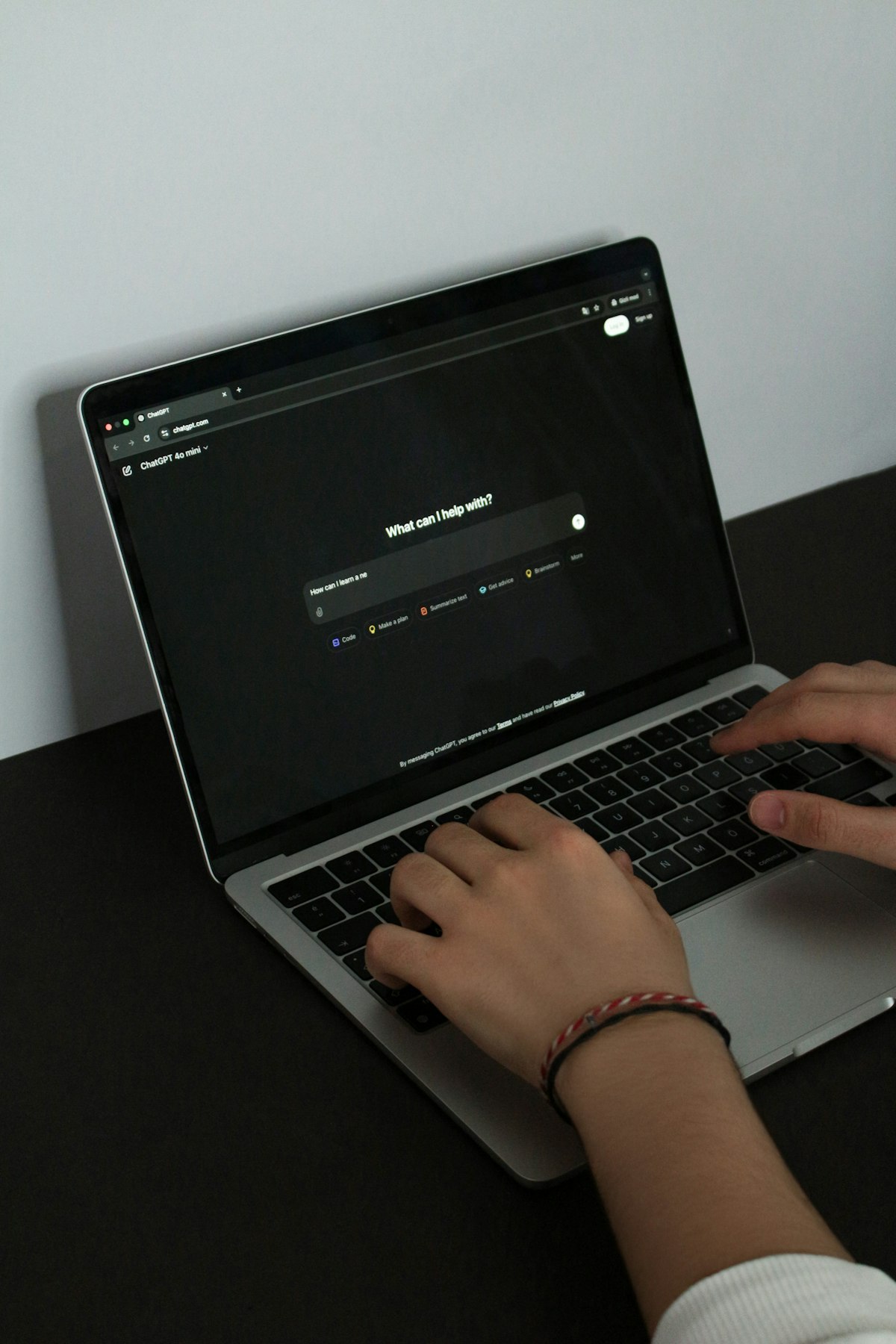
GPT-5.5 Instant became ChatGPT’s default model on May 5, 2026. I noticed it during a client brief session — the response was tighter than I expected, no trailing questions, no unsolicited bullet points. It turns out OpenAI quietly swapped the engine under the hood for every logged-in user. Here is what the three real changes mean for day-to-day freelance work.
In This Article
- GPT-5.5 Instant Is Now the Default — What Changed Under the Hood
- 30% Fewer Words: Less Cleanup Before You Send
- 52.5% Fewer Hallucinations: Still Verify, But the Bar Moved
- Memory Sources: ChatGPT Now Shows Its Work
- For Me, This Shifts One Habit Immediately
GPT-5.5 Instant Is Now the Default — What Changed Under the Hood
GPT-5.5 Instant replaces GPT-5.3 Instant as the live engine inside every ChatGPT session as of May 5, 2026. You do not need to switch anything. Free-tier users get it automatically, though the limit sits at 10 messages per 5-hour window before the session falls back to the mini model. Plus users ($20/month) get 160 messages per 3-hour window.
GPT-5.3 Instant stays available in model settings for paid accounts for three more months before OpenAI retires it — so if you have prompt templates built around the old behavior, you have a window to migrate them before defaults change under you again.
If you are still weighing whether to keep paying for both ChatGPT and Claude, that decision looks different after this update — the accuracy gap that made Claude the safer pick for long-form client work is narrowing.
30% Fewer Words: Less Cleanup Before You Send
OpenAI’s own benchmarks show GPT-5.5 Instant uses 30.2% fewer words and 29.2% fewer lines than GPT-5.3 Instant on comparable prompts. The model also drops gratuitous emoji and stops adding unprompted follow-up questions at the end of answers.
For a freelancer this is practical: the old pattern was to ask for a client email draft and spend two minutes trimming padding before forwarding. That trimming step should shrink. It will not disappear — the model still over-explains on complex briefs — but the baseline verbosity is lower.
One caveat: prompts that relied on the model’s tendency to enumerate every detail may now return answers that feel too thin. I have already adjusted two templates that used “list everything relevant” phrasing, replacing them with explicit counts (“list the 4 most relevant points”).
52.5% Fewer Hallucinations: Still Verify, But the Bar Moved
OpenAI tested GPT-5.5 Instant against high-stakes prompts in medicine, law, and finance. The result: 52.5% fewer hallucinated claims compared to GPT-5.3 Instant on that category of questions. On conversations users had already flagged for factual errors, inaccurate claims dropped by 37.3%.
“GPT-5.5 Instant produced 52.5% fewer hallucinated claims than GPT-5.3 Instant on high-stakes prompts.” — OpenAI, May 5, 2026
This matters for freelancers who use ChatGPT to draft research summaries or competitive landscape sections for client decks. The risk of slipping in a wrong statistic drops — but the practice of spot-checking any claim you plan to publish stays non-negotiable. The model improved; the category of error did not disappear.
Memory Sources: ChatGPT Now Shows Its Work
The third change is the most structurally new. GPT-5.5 Instant introduces a memory sources panel that surfaces which past chats, saved reminders, or uploaded files informed a given response. You can review and delete individual entries from that panel.
For Plus and Pro subscribers, the model can now pull context from past sessions, uploaded files, and connected Gmail accounts to tailor answers without you re-explaining the project each time. OpenAI calls this out as initially limited to paid tiers, with broader rollout coming in the following weeks.
The practical scenario: you are three months into a retainer, the client’s voice guidelines are in a file you uploaded in January, and ChatGPT references them correctly without you pasting the doc again. The memory sources panel lets you confirm that is actually what happened — and remove stale context if the client changed their guidelines in April.
For Me, This Shifts One Habit Immediately
For me, the biggest near-term change is adjusting prompts that assumed a verbose baseline. The tighter default means some of my “summarize and also mention” type prompts now return the summary without the “also mention” portion unless I make it explicit. That is a better behavior — I would rather add back what I need than cut what I do not.
Earlier this year, I looked at what the GPT-5.5 release meant before I ran head-to-head tests against Claude Code — GPT-5.5 Instant directly addresses the accuracy concerns I flagged there. The hallucination reduction is real and measurable.
The memory sources panel is the feature I will watch most closely over the next month. Personalization that you can audit and correct is more trustworthy than personalization that runs silently. If the context panel proves reliable in practice, it could reduce the re-briefing overhead that eats into the first 10 minutes of most ChatGPT sessions on recurring client work.
The update is live for all logged-in users now. If your current workflow relies on long ChatGPT conversations to maintain project context, the memory sources feature is the first thing worth exploring after you open a new chat today.
Sources
- GPT-5.5 Instant: smarter, clearer, and more personalized — OpenAI, May 5, 2026
- OpenAI releases GPT-5.5 Instant, a new default model for ChatGPT — TechCrunch
- ChatGPT update rolls out GPT-5.5 Instant with fewer hallucinations — The Decoder
- GPT-5.5 Instant shows you what it remembered — just not all of it — VentureBeat
AI-assisted research and drafting. Reviewed and published by ToolMint.